

Introduction:
Before you even see two lines on a pregnancy test, your pre-pregnancy weight is already quietly shaping your prenatal care plan. Body Mass Index (BMI) a simple ratio of weight to height is one of the first numbers your doctor will calculate, because it determines how much weight gain is considered healthy for you specifically over the next nine months.
What Is Pre-Pregnancy BMI, and Why Does It Matter?
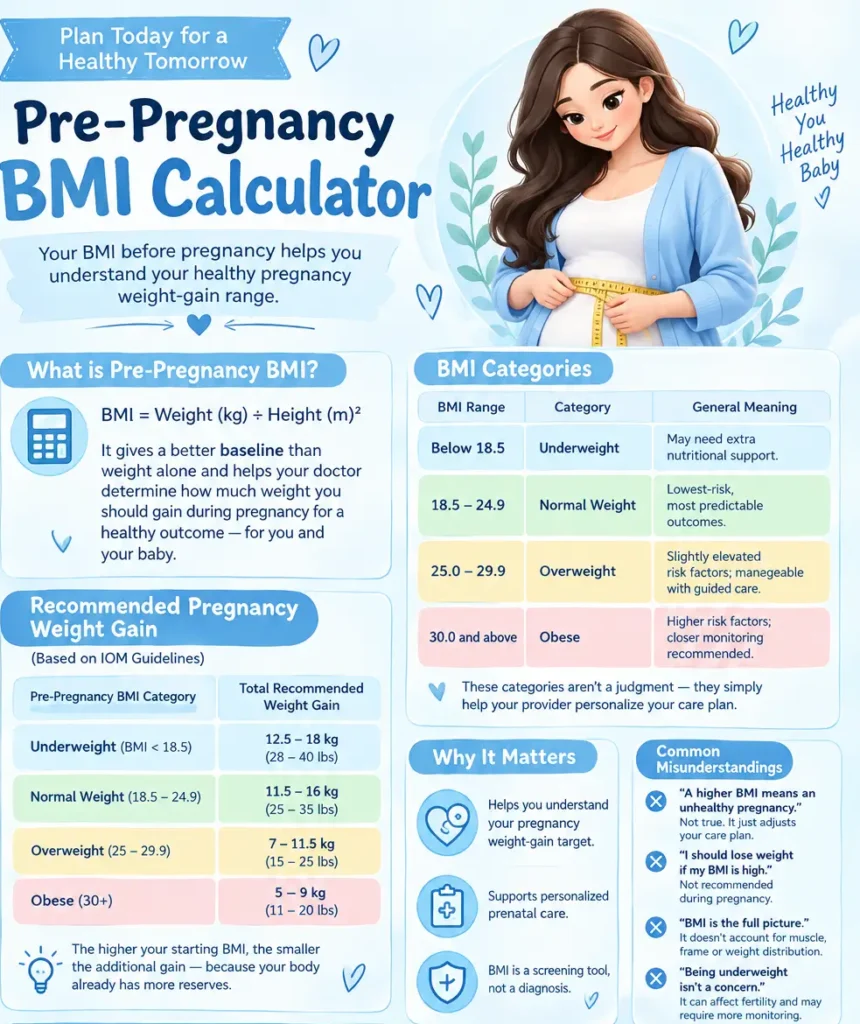
BMI is calculated using a simple formula:
BMI = weight (kg) ÷ height (m)²
Unlike a scale reading alone, BMI accounts for your height, giving a more useful baseline for comparing weight status across different body types. Before pregnancy, this number helps your doctor answer one key question: how much weight should you gain during pregnancy to support a healthy outcome for both you and your baby?
This matters because gaining too little or too much weight during pregnancy carries different risks for baby’s growth, for delivery, and for your own recovery afterward. BMI is the starting point for that personalized target.
BMI Categories and What They Mean
Table 1
| BMI Range | Category | General Meaning |
| Below 18.5 | Underweight | May need extra nutritional support before and during pregnancy |
| 18.5 – 24.9 | Normal Weight | Associated with the most predictable, lowest-risk outcomes |
| 25.0 – 29.9 | Overweight | Slightly elevated risk factors; manageable with guided care |
| 30.0 and above | Obese | Higher risk factors; closer monitoring typically recommended |
Based on Institute of Medicine (IOM) guidelines, still widely used by OB/GYNs today:
Table 2
| Pre-Pregnancy BMI Category | Total Recommended Weight Gain |
| Underweight (BMI < 18.5) | 12.5 – 18 kg (28 – 40 lbs) |
| Normal Weight (18.5 – 24.9) | 11.5 – 16 kg (25 – 35 lbs) |
| Overweight (25 – 29.9) | 7 – 11.5 kg (15 – 25 lbs) |
| Obese (30+) | 5 – 9 kg (11 – 20 lbs) |
Notice the pattern: the higher your starting BMI, the smaller the additional recommended gain not because your body needs less support, but because higher starting reserves already provide some of the energy needed for pregnancy.
Tips for a Healthy Pre-Pregnancy and Pregnancy Weight Journey
- Calculate your BMI using your weight before pregnancy, not your current weight, for the most accurate baseline.
- If your BMI falls outside the “Normal” range, talk to your doctor before conceiving, if possible early planning gives the best outcomes.
- Focus on nutrient-dense foods (protein, whole grains, fruits, vegetables) rather than simply eating “more” or “less.”
- Track your weight weekly rather than daily day-to-day fluctuations from water retention can be misleading.
- Pair your BMI number with a conversation about activity level, medical history, and any existing conditions BMI alone doesn’t capture the full picture.