

Introductoin
Every expecting parent asks the same question first: when will my baby actually arrive? A due date calculator can’t tell you the exact day, but it gives you something almost as useful a reliable starting point your entire prenatal care schedule will be built around.
The Math Behind Every Due Date Calculator: Naegele’s Rule
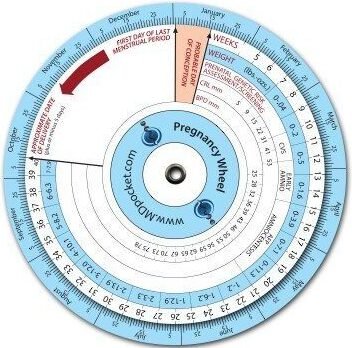
Most due date calculators whether it’s the one on your OB’s website or a free app run on a 200-year-old formula. Dr. Franz Naegele, a German obstetrician, worked out that pregnancy typically lasts close to 280 days from the first day of your last menstrual period (LMP). His shortcut: take your LMP, add one year, subtract three months, and add seven days. Do the math either way and you land on the same date
Worked example:
LMP starts March 3 → count forward 280 days → estimated due date of December 8.
Two built-in assumptions make this formula work:
- Your cycle runs 28 days
- Ovulation happens on day 14
- When both are true, the math holds up well. When they’re not more on that below the estimate drifts.
What the Calculator Actually Needs From You
At minimum, a due date calculator needs one thing: the first day of your LMP. A better calculator also asks for your average cycle length, because not everyone ovulates on day 14.
If your cycles run 32 days instead of 28, ovulation likely happened later which pushes your real due date later too. If you’ve been tracking ovulation with test strips, temperature charts, or a fertility app, entering your actual conception date instead of your LMP removes that guesswork entirely.
Comparing the Different Ways to Estimate a Due Date
Table 1
| Method | What It Uses | Typical Accuracy | Best For |
| LMP (Naegele’s Rule) | First day of last period | Within 1–2 weeks (regular cycles) | Regular 28-day cycles, known LMP |
| First-Trimester Ultrasound (CRL) | Embryo measurement, ideally before 14 weeks | Within 5–7 days | Irregular cycles, unknown LMP |
| Conception/Ovulation Date | A tracked ovulation day | Similar to ultrasound, when precise | Active ovulation tracking |
| IVF Transfer Date | Egg retrieval or embryo transfer date | Most precise of all methods | IVF pregnancies |
Doctors generally treat a first-trimester ultrasound as the gold standard. If it disagrees with your LMP-based date by more than 5–7 days, your provider will usually re-date the pregnancy to match the scan not because anything went wrong, but because direct measurement beats backward estimation.
Common Mistakes That Throw Off a Due Date Calculation
- Entering the wrong date Naegele’s rule always uses the first day of bleeding, not the last day of your period.
- Assuming a 28-day cycle when yours runs longer a 35-day cycle shifts true ovulation back by about a week, making an uncorrected estimate roughly a week too early.
- Confusing gestational age with fetal age your provider counts weeks from your LMP, not from conception, so you’re always “further along” on paper than the embryo’s actual age.
- Treating an early guess as final if an ultrasound shifts your date by a few days, that’s a correction, not an error.
Trimesters and Key Prenatal Milestones by Gestational Week
Table 2
| Stage | Weeks | What Typically Happens |
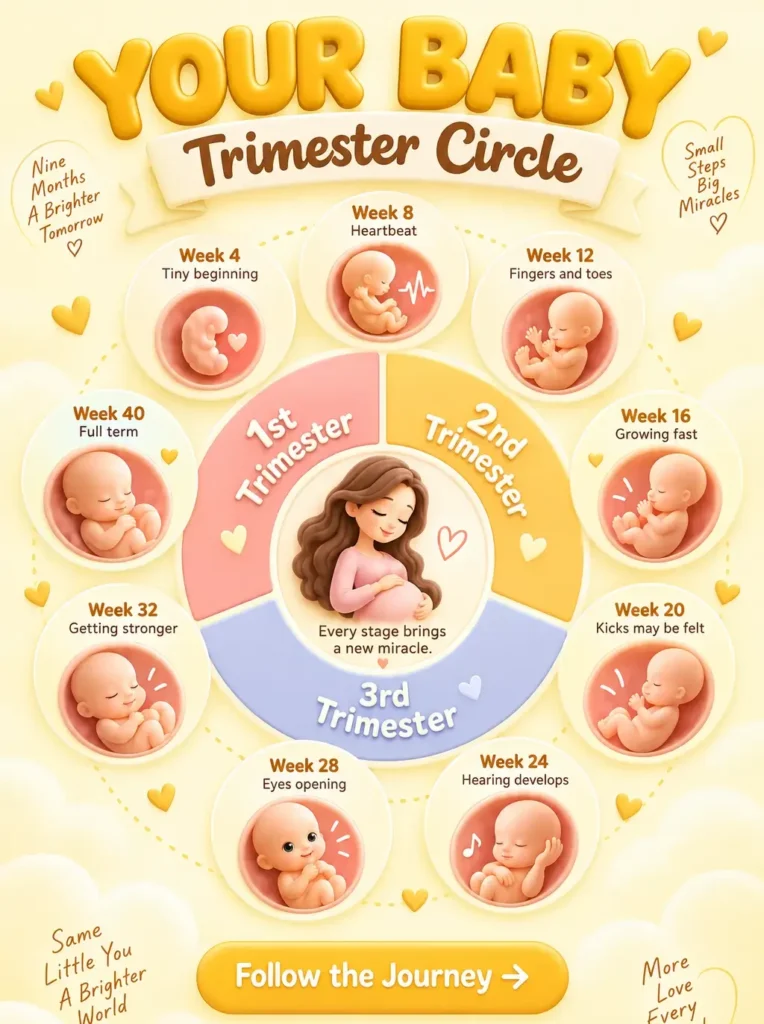
| First Trimester | Weeks 1–12 | Major organ development; first prenatal visit; genetic screening (weeks 10–13) |
| Second Trimester | Weeks 13–26 | Energy often improves; anatomy scan (weeks 18–22); first fetal movements |
| Third Trimester | Weeks 27–40 | Rapid weight gain; lung maturity; Group B strep test near the end |
| Early Term | 37w0d–38w6d | Baby considered early-term |
| Full Term | 39w0d–40w6d | Lowest-risk delivery window |
| Late Term | 41w0d–41w6d | Provider monitors more closely |
| Postterm | 42w0d+ | Induction often discussed |
When the Standard Formula Is Less Reliable
Naegele’s rule leans on assumptions that don’t hold for everyone. Your estimate may be less accurate if you have:
- Irregular cycles (common with PCOS)
- Recently stopped hormonal birth control
- Been breastfeeding, which can delay ovulation’s return
- A twin or multiple pregnancy
- A recent miscarriage affecting your cycle
In any of these situations, a first-trimester ultrasound is the more dependable option not the LMP-based calculator alone.
Quick Tips for a More Accurate Estimate
- Track your cycle length for 2–3 months before entering it into a calculator a one-off guess can throw off the math.
- If you know your ovulation date, use a conception-date calculator instead of LMP for a tighter estimate.
- Book your first prenatal visit by week 10 this is when a dating ultrasound typically confirms or adjusts your due date.
- Don’t lock in non-refundable travel or leave dates until after your dating scan.
- Remember: only about 4–5% of babies are born on their exact due date, and roughly 80% arrive between weeks 38 and 42 treat your date as a window, not a deadline.