
Note: This calculator is for general adults, not for pregnancy dieting. If you are pregnant, please follow your doctor’s advice.
Blood Pressure Checker
Check your blood pressure category using the latest 2025 AHA/ACC and 2024 ESC guidelines. Enter one reading, or the average of your home readings, and see what to do next.
What to do next
Your readings compared with the goals
| Goal | Target | Your gap |
|---|
Blood pressure categories for adults
| Category (AHA/ACC 2025) | Systolic | Diastolic | |
|---|---|---|---|
| Normal | Below 120 | and | Below 80 |
| Elevated | 120 to 129 | and | Below 80 |
| Stage 1 hypertension | 130 to 139 | or | 80 to 89 |
| Stage 2 hypertension | 140 or higher | or | 90 or higher |
| Hypertensive crisis | Above 180 | and/or | Above 120 |
If your systolic and diastolic fall in different categories, the higher category applies. The 2024 ESC guideline uses: non-elevated below 120/70, elevated 120 to 139 / 70 to 89, and hypertension 140/90 or above. Low blood pressure is commonly defined as below 90/60.
How to use this calculator
- Do not drink coffee, smoke or exercise for 30 minutes before measuring. Go to the toilet first.
- Sit with your back supported, feet flat on the floor and legs uncrossed. Rest quietly for 5 minutes.
- Rest your arm on a table with the cuff at heart level, on bare skin. Do not talk while measuring.
- Choose One reading, or Average of several home readings. For the average, use at least 2 readings a day (morning and evening, 1 minute apart) for 3 to 7 days.
- Type your systolic (top) and diastolic (bottom) numbers in mmHg.
- Tell us if you are pregnant and whether you have any warning symptoms. Both change the advice.
- Press Check my blood pressure. You will see your category under both guidelines, what to do next and how far you are from the goals.
- Repeat on different days. One high reading does not mean you have high blood pressure, but repeated high readings need a doctor.
This tool is for information and is not a diagnosis or medical advice. Only a doctor can diagnose high blood pressure. Do not start, stop or change any medicine because of this result. If you think you are having a medical emergency, call your local emergency number straight away.
Blood Pressure Checker
Is Your Blood Pressure Normal?
High blood pressure is often called the silent killer, because most people feel completely fine while it quietly damages the heart, brain, kidneys and eyes. Our blood pressure checker tells you in seconds whether your reading is normal, elevated or high, using the latest 2025 AHA/ACC guideline
and the 2024 European (ESC) guideline side by side. It can average several home readings, warns you about a hypertensive crisis, adjusts its
advice for pregnancy and tells you what to do next.
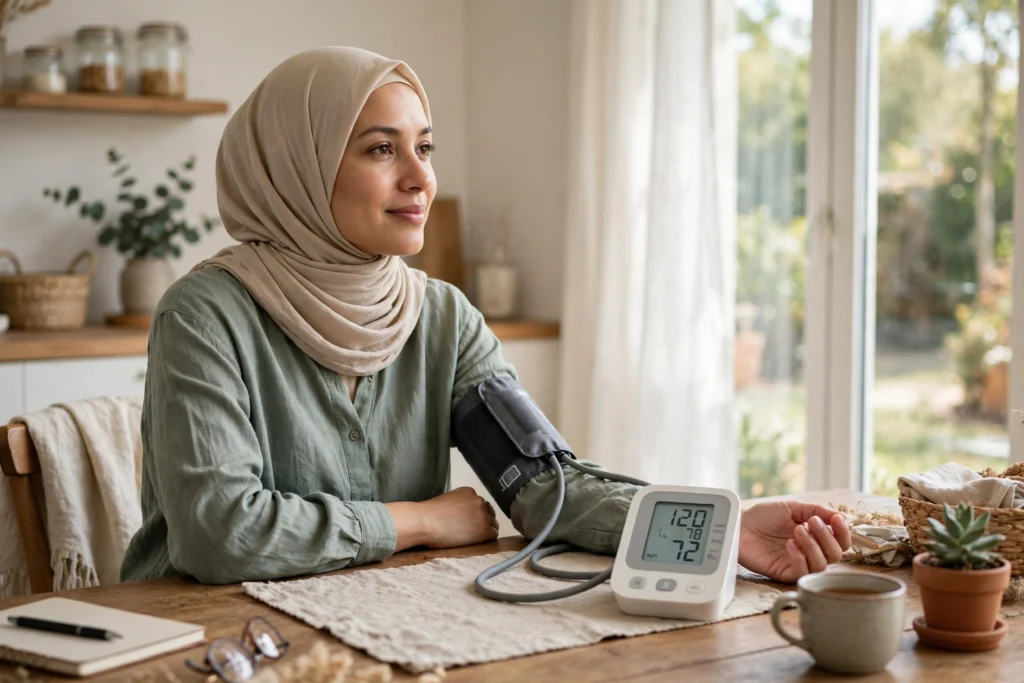
Quick Answer: What Is a Normal Blood Pressure?
A normal adult blood pressure is below 120/80 mmHg. A reading of 130/80 or higher is now considered high blood pressure (stage 1 hypertension) under the American guideline.
| Category (AHA/ACC 2025) | Systolic (top number) | Diastolic (bottom number) | |
|---|---|---|---|
| Normal | Below 120 | and | Below 80 |
| Elevated | 120 to 129 | and | Below 80 |
| Stage 1 hypertension | 130 to 139 | or | 80 to 89 |
| Stage 2 hypertension | 140 or higher | or | 90 or higher |
| Hypertensive crisis | Above 180 | and/or | Above 120 |
If your top and bottom numbers fall in different categories, the higher category applies. For example, 125/85 is stage 1, because the diastolic number is 85.
2024 ESC Guideline: A Slightly Different Scale
The European Society of Cardiology updated its guideline in 2024 with three simple groups:
| ESC 2024 category | Office blood pressure |
|---|---|
| Non-elevated | Below 120/70 mmHg |
| Elevated | 120 to 139 / 70 to 89 mmHg |
| Hypertension | 140/90 mmHg or higher |
The ESC says that home or 24-hour monitoring is preferred for diagnosis when possible, and that a home average of 135/85 or higher points to hypertension. Our checker shows both results so you can compare. The ESC has also set a target of 120 to 129 systolic for most treated patients.
What Is New in the 2025 Blood Pressure Guideline?
The American Heart Association and American College of Cardiology published a new guideline in August 2025, replacing the 2017 version. Key points:
- The categories stay the same. Normal is below 120/80, and 130/80 is still the start of stage 1 hypertension.
- A risk-based approach. The guideline recommends the PREVENT risk calculator, which estimates your 10-year risk of heart attack, stroke and heart failure. Medicine at stage 1 depends largely on your overall risk, with 7.5% as an important threshold.
- Target. The goal for most adults is below 130/80, and many are encouraged to aim even lower (below 120/80) when it is safe.
- Accurate measurement matters. The guideline advises against relying on cuffless devices, including smartwatches, until they prove more accurate.
- Screening for everyone. All adults should have their blood pressure checked regularly.
Your doctor decides whether you need medicine. A checker like this tells you where you stand and when to seek help.
How Does This Blood Pressure Checker Work?
- You enter one reading or up to six. For several readings, we average them, which is far more reliable than a single number.
- Classification. We compare your result with the AHA/ACC 2025 and ESC 2024 categories.
- Safety checks. A reading above 180/120 triggers a crisis alert, and your symptoms change the advice. Pregnancy uses its own limits.
- Extra numbers. We calculate pulse pressure and mean arterial pressure (see our MAP Calculator).
- Next steps. You get plain advice for your category and see how far you are from each goal.
Example
Four home readings: 132/84, 128/80, 136/86 and 130/82.
| Step | Result |
|---|---|
| Average systolic | (132 + 128 + 136 + 130) ÷ 4 = 131.5, rounded to 132 |
| Average diastolic | (84 + 80 + 86 + 82) ÷ 4 = 83 |
| AHA/ACC 2025 | Stage 1 hypertension |
| ESC 2024 | Elevated blood pressure |
| Pulse pressure | 132 − 83 = 49 mmHg |
Systolic and Diastolic: What Do the Numbers Mean?
- Systolic (top number): the pressure in your arteries when your heart beats.
- Diastolic (bottom number): the pressure between beats, when the heart rests.
- Pulse pressure: systolic minus diastolic. About 40 mmHg is typical. A reading above 60 is considered wide and is common with stiff arteries.
- Mean arterial pressure (MAP): the average pressure during a heartbeat, used in hospitals to check blood flow to organs.
In people over 50, the systolic number is generally the more important one for heart and stroke risk.
How to Measure Blood Pressure at Home Correctly
Wrong technique is the main reason for wrong readings. Follow these steps:
- Choose a validated upper-arm cuff. Wrist and finger devices, and smartwatches, are less reliable. Use the right cuff size for your arm.
- Avoid caffeine, smoking and exercise for 30 minutes before measuring, and empty your bladder.
- Sit calmly for 5 minutes with your back supported, feet flat and legs uncrossed.
- Support your arm on a table so the cuff is at heart level, on bare skin.
- Do not talk or move during the reading.
- Take two readings, one minute apart, and record both.
- Measure at the same times each day, ideally morning (before medicine and breakfast) and evening.
- Repeat for 3 to 7 days and use the average, ignoring the first day if you like.
A single high reading at the clinic can be due to nervousness (white-coat effect). Some people have normal readings in the clinic but high readings at home (masked hypertension), which is why home averages matter.
Hypertensive Crisis: When Is High BP an Emergency?
A reading above 180/120 is a hypertensive crisis.
- With symptoms: chest pain, shortness of breath, severe headache, back pain, numbness or weakness, vision change or trouble speaking. This may be a hypertensive emergency. Call your local emergency number immediately (for example 1122 in Pakistan, 112 in India or 911 in the US).
- Without symptoms: sit quietly for 5 minutes and measure again. If it is still above 180/120, contact your doctor the same day, or go to a hospital.
Low Blood Pressure (Hypotension)
Low blood pressure is commonly defined as below 90/60 mmHg. For many fit, healthy people it is normal and harmless. It needs medical attention if it causes:
- Dizziness or fainting
- Unusual tiredness or confusion
- Blurred vision, nausea or cold, clammy skin
Common causes include dehydration, long periods of standing, some medicines, heat, pregnancy, bleeding, infections and heart or hormone problems. Drinking enough water and standing up slowly help. Use our Water Intake Calculator to find your daily target.
Blood Pressure in Pregnancy
The adult categories above are not designed for pregnancy. In pregnancy:
- Under 140/90 is generally considered acceptable.
- 140/90 or higher needs same-day advice from your doctor or midwife.
- 160/110 or higher is severe and needs emergency care.
- Headache, vision changes, sudden swelling or upper abdominal pain with high pressure can signal pre-eclampsia and need urgent attention.
What Causes High Blood Pressure?
Most cases have no single cause. Risk factors include:
- A diet high in salt, processed food and low in fruit and vegetables
- Being overweight, especially carrying fat around the waist (check yours with our Waist-to-Hip Ratio Calculator and BMI Calculator)
- Lack of exercise, poor sleep and sleep apnoea
- Smoking, tobacco chewing and heavy alcohol use
- Stress
- Family history, increasing age and diabetes
- Kidney disease, thyroid problems and some medicines (for example painkillers, decongestants, steroids)
How to Lower Blood Pressure Naturally
Lifestyle change works, and it is the foundation of treatment at every stage. The approximate effects below come from clinical research on adults with high blood pressure, and vary person to person.
| Change | Approximate drop in systolic BP |
|---|---|
| DASH-style eating (more fruit, vegetables, pulses, low-fat dairy) | 8 to 11 mmHg |
| Regular exercise (150 minutes of brisk activity a week) | 5 to 8 mmHg |
| Reducing salt | 5 to 6 mmHg |
| Losing weight | About 1 mmHg per kg lost |
| Limiting alcohol | 4 mmHg |
| More potassium from food (if your kidneys are healthy) | 4 to 5 mmHg |
Practical Tips for South Asian Diets
- Cut hidden salt. Pickles (achaar), papad, chutneys, namkeen, instant noodles, salted snacks, stock cubes, and restaurant food add a lot of sodium. The World Health Organization recommends less than 5 g of salt a day (about one level teaspoon).
- Use less salt in curries, add lemon, ginger, garlic, coriander and spices for taste.
- Eat more potassium: bananas, spinach (palak), tomatoes, potatoes with skin, dals, beans, coconut water and yoghurt.
- Go easy on tea with sugar, fried foods and fatty meats. Choose roti with whole wheat, brown rice, oats and pulses.
- Walk daily. Even 30 minutes of brisk walking most days helps.
- Do not use tobacco in any form, including gutka, paan with tobacco and shisha.
- Control weight and waist. Our Calorie Deficit Calculator can help you plan.
When to See a Doctor
- Your home average is 130/80 or higher on several days
- Any single reading is 180/120 or higher
- You have diabetes, kidney disease or heart disease and your readings are above your target
- You are pregnant and your readings are 140/90 or higher
- You have symptoms such as chest pain, severe headache or sudden weakness (seek emergency care)
Do not start, stop or change blood pressure medicine on your own, and never stop it just because your readings improve.
Common Blood Pressure Myths
- “I feel fine, so my BP is fine.” High blood pressure usually has no symptoms.
- “Only older people get hypertension.” It can affect young adults too.
- “One high reading means hypertension.” Diagnosis needs repeated or home readings.
- “I can stop medicine when my numbers are normal.” The numbers are normal because of the medicine.
- “A smartwatch is as good as a cuff.” Current guidance advises against relying on cuffless devices.
- “Salt only matters if I add it at the table.” Most salt comes from processed and restaurant food.
Common Measurement Mistakes
- Measuring right after a walk, tea or an argument
- Talking, crossing legs or leaving the arm hanging
- Using a cuff that is too small
- Taking only one reading
- Measuring over clothing
- Comparing readings from different devices
Related Calculators
- MAP Calculator
- BMI Calculator
- Waist-to-Hip Ratio Calculator
- Water Intake Calculator
- Calorie Deficit Calculator
- Body Fat Percentage Calculator
Frequently Asked Questions
What is a normal blood pressure?
For adults, normal blood pressure is below 120/80 mmHg.
What is considered high blood pressure?
Under the 2025 AHA/ACC guideline, 130/80 mmHg or higher is high blood pressure (stage 1), and 140/90 or higher is stage 2. The ESC uses 140/90 as the hypertension threshold.
Is 130/80 high?
Yes, by the American guideline it is stage 1 hypertension. Under the European guideline it is “elevated”. Either way it is worth acting on with lifestyle changes and discussing with a doctor.
What is a dangerous blood pressure level?
A reading above 180/120 is a hypertensive crisis. With symptoms such as chest pain or trouble speaking, it is an emergency. A reading below 90/60 with dizziness or fainting also needs medical attention.
What is a good blood pressure by age?
The categories for adults are the same at every age: below 120/80 is normal. Doctors may set different targets for people over 80 or those with frailty.
Is 140/90 high?
Yes. It is stage 2 hypertension on the AHA/ACC scale and hypertension on the ESC scale.
What is the difference between elevated and high blood pressure?
Elevated blood pressure (120 to 129 with diastolic below 80) is a warning stage. Lifestyle change can often bring it down. High blood pressure begins at 130/80 in the American guideline.
How many readings do I need at home?
Two readings, one minute apart, morning and evening, for 3 to 7 days. Use the average.
What time of day is blood pressure highest?
It usually rises after waking and is lower during sleep. This is why morning and evening readings are recommended.
Can stress or anxiety raise blood pressure?
Yes, temporarily. Repeated measurements after resting help avoid false alarms.
Which arm should I use?
Use the arm with the higher reading if the two differ, and always use the same arm afterwards. Tell your doctor if the difference is large.
Can high blood pressure be cured?
It can often be controlled and sometimes reversed in its early stages with weight loss, exercise, a low-salt diet and treating causes. Many people also need long-term medicine.
Does drinking water lower blood pressure?
Staying hydrated helps your circulation, but water alone does not treat high blood pressure.
Is this checker a diagnosis?
No. Only a doctor can diagnose high blood pressure, after repeated measurements.
Final Thoughts
Check your blood pressure correctly, at home if possible, and use the average of several readings. If your result is 130/80 or higher on repeated days, see a doctor, start lifestyle changes today and ask about your overall heart risk. If it is above 180/120 with symptoms, get emergency help immediately.
Medical disclaimer:
This checker and article are for education only and are not medical advice or a diagnosis. Always consult a doctor about your blood pressure, and never change your medicine without medical advice.