

Introduction
Teething is one of the first big milestones parents wait for, and also one of the most worrying. A fussy baby, sore gums, and a lot of drooling can make any parent ask: is this teething, and when will the tooth come through?
This guide explains the usual order and timing of baby teeth, what symptoms teething really causes, what it does not cause, and safe ways to help your baby feel better. Every baby is different, so the ages below are guides, not deadlines.
What Is Teething?
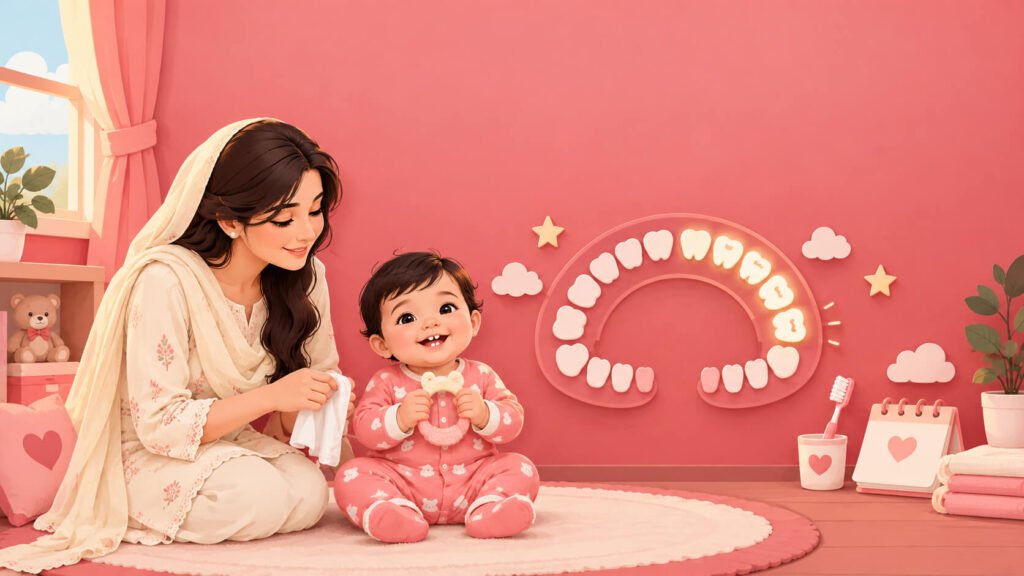
Teething is the process of a baby’s first teeth, called primary teeth or milk teeth, pushing through the gums. Babies are born with all 20 primary teeth already formed under the gums. They usually start to appear from around 6 months, and most children have all 20 by around 3 years old.
Some babies get their first tooth at 4 months, and some not until after their first birthday. Both can be normal. What matters most is the overall pattern over time, not one single tooth arriving on a set date.
How to Use the Baby Teething Chart Calculator
Step 1: Open the Baby Teething Chart Calculator.
Step 2: Enter your baby’s date of birth, so the calculator can work out your baby’s age in months.
Step 3: Look at the chart. It shows which teeth are usually coming in at your baby’s age, which teeth have usually already appeared, and which teeth are due next.
Step 4: Check the symptoms and relief section below, so you know what is normal and what needs a doctor’s advice.
The calculator uses average eruption ages. It cannot tell you the exact day a tooth will appear for your baby.
Baby Teething Chart: Order and Timing
Teeth usually appear in pairs, lower teeth first, then the matching upper teeth. This table shows the usual order and the usual age range for each pair.
| Teeth | Usual Age |
|---|---|
| Lower central incisors, bottom front 2 | 6 to 10 months |
| Upper central incisors, top front 2 | 8 to 12 months |
| Upper lateral incisors, beside the top front teeth | 9 to 13 months |
| Lower lateral incisors, beside the bottom front teeth | 10 to 16 months |
| First molars, back teeth for chewing | 13 to 19 months |
| Canines, pointed teeth beside the front teeth | 16 to 22 months |
| Second molars, last back teeth | 23 to 33 months |
By around 3 years, most children have 20 primary teeth: 10 on top and 10 on the bottom.
Worked Example
Suppose a baby was born on 1 March 2026. On 29 October 2026, that baby is 7 months and 28 days old, about 8 months old.
On the teething chart, an 8-month-old is usually in the stage where the lower central incisors have appeared or are coming through, and the upper central incisors are due soon.
The next teeth to watch for would be the upper central incisors, usually at 8 to 12 months, followed by the upper lateral incisors at 9 to 13 months. If no tooth has appeared yet at 8 months, that alone is not a reason to worry. If no teeth have appeared by 18 months, ask your doctor or dentist.
What Are the Symptoms of Teething?
Teething symptoms are usually mild and come and go. Common signs include:
- Sore, red, or swollen gums where a tooth is coming through
- More drooling than usual, and a rash around the mouth or chin from drool
- Chewing on fingers, toys, or anything within reach
- Being more irritable, clingy, or unsettled than usual
- Slightly disturbed sleep for a few nights
- A small, bluish bump on the gum where the tooth is about to appear
- A slightly raised temperature, but usually below 38°C (100.4°F)
Symptoms usually ease once the tooth breaks through the gum.
What Teething Does NOT Cause
Teething is often blamed for every illness in a baby’s first year, but it does not cause all of them. Teething does not normally cause:
- A high fever, above 38°C (100.4°F)
- Diarrhoea or vomiting
- A bad cough, cold, or ear infection
- A widespread rash, other than a drool rash around the mouth
If your baby has a high fever, diarrhoea, vomiting, or seems unwell, do not assume it is only teething. Contact your doctor, especially if the baby is under 3 months old and has a fever.
Safe Ways to Help a Teething Baby
Gum Massage
Wash your hands and gently rub your baby’s sore gum with a clean finger for a minute or two. Many babies find this soothing.
A Cold Teether
Give your baby a clean teething ring or washcloth that has been chilled in the fridge, not frozen. A frozen teether can be too hard and can hurt sore gums.
Something Safe to Chew
Offer a clean, age-appropriate teething toy. Avoid small parts that could break off, and never use a teething necklace, bracelet, or amber beads, as these are choking and strangulation hazards.
Keep the Chin Dry
Gently wipe drool from your baby’s chin and apply a plain barrier cream, such as petroleum jelly, to protect the skin from a drool rash.
Pain Relief, Only If Needed
If your baby is very uncomfortable and cannot sleep or feed, ask your doctor or pharmacist about pain relief. Do not use teething gels containing benzocaine for babies under 2 years unless a doctor advises it, and do not use aspirin for babies.
Teething and Feeding
Teething can make feeding uncomfortable for a few days. Some babies feed less, some want to feed more for comfort, and some refuse a bottle or breast because sucking hurts their gums.
Keep offering feeds as usual, and offer cool, soft foods if your baby has started solids, such as chilled yoghurt or soft fruit. If your baby refuses feeds for more than a day, is drinking much less than usual, or has fewer wet nappies, contact your doctor.
When to Call the Doctor or Dentist
Contact your doctor or dentist if:
- No teeth have appeared by 18 months
- A tooth comes through very early, before 3 months, or a tooth is loose
- Your baby has a fever above 38°C (100.4°F), diarrhoea, or vomiting
- Your baby seems very unwell, unusually sleepy, or will not feed
- The gum looks very swollen, bleeding a lot, or has a sore that does not heal
- Teeth appear badly discoloured, damaged, or in the wrong place
A first dental visit is usually recommended by your baby’s first birthday, or within 6 months of the first tooth appearing.
Related tools
- Baby Teething Chart Calculator
- Baby Age Calculator
- Baby Weight Percentile Calculator
- Baby Solid Food Planner
- Baby Vaccination Schedule Calculator
FAQs
When do babies start teething?
Most babies start teething at around 6 months, but the normal range is wide. Some start at 4 months and some after 12 months, and both can be normal.
How long does teething pain last for each tooth?
The sorest time is usually a few days before the tooth breaks through, and it eases once the tooth is through. Teething as a whole lasts on and off until all 20 primary teeth are in, usually by around 3 years.
Can teething cause a fever?
Teething can cause a very slight rise in temperature, but not a high fever. A temperature above 38°C (100.4°F) is not usually caused by teething alone and should be checked.
Do all babies get teething symptoms?
No. Some babies get teeth with almost no fuss at all, and parents only notice the tooth when it appears. Others are unsettled for days with each tooth. Both are normal.
Should I clean my baby’s first teeth?
Yes. As soon as the first tooth appears, clean it twice a day with a soft baby toothbrush and a tiny smear of fluoride toothpaste, about the size of a grain of rice. Ask your dentist about the right toothpaste for your baby’s age.
Sources
- American Academy of Pediatrics, HealthyChildren.org, Teething: https://www.healthychildren.org/English/ages-stages/baby/teething-tooth-care/Pages/Teething.aspx
- NHS, Teething: https://www.nhs.uk/conditions/baby/health/teething/
- American Dental Association, Teething: https://www.mouthhealthy.org/en/babies-and-kids/first-tooth
Disclaimer
This article is for information only and is not medical advice. If you are worried about your baby’s teeth, feeding, or health, speak to your doctor or dentist.