

How Much Protein Do I Need in Pregnancy on a Vegetarian Indian Diet?
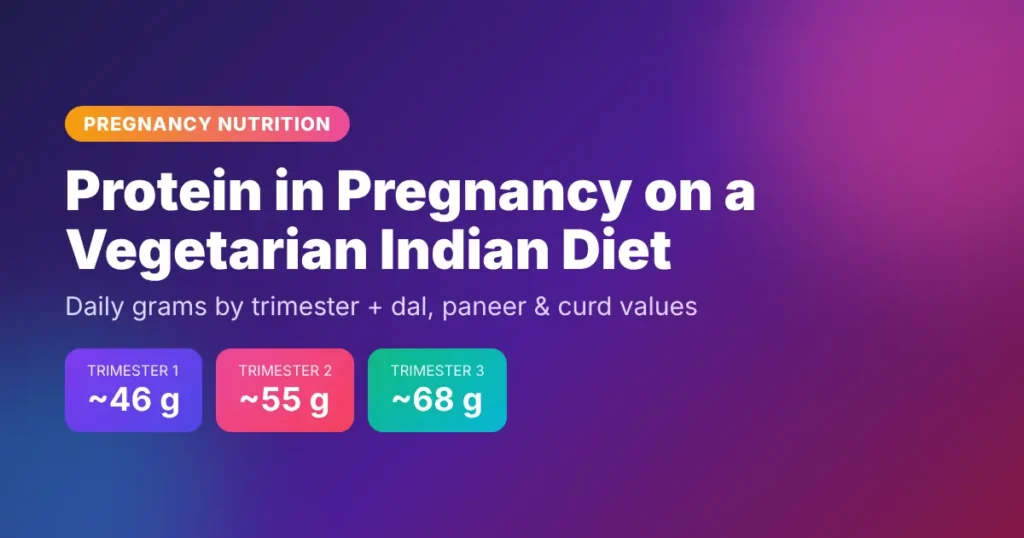
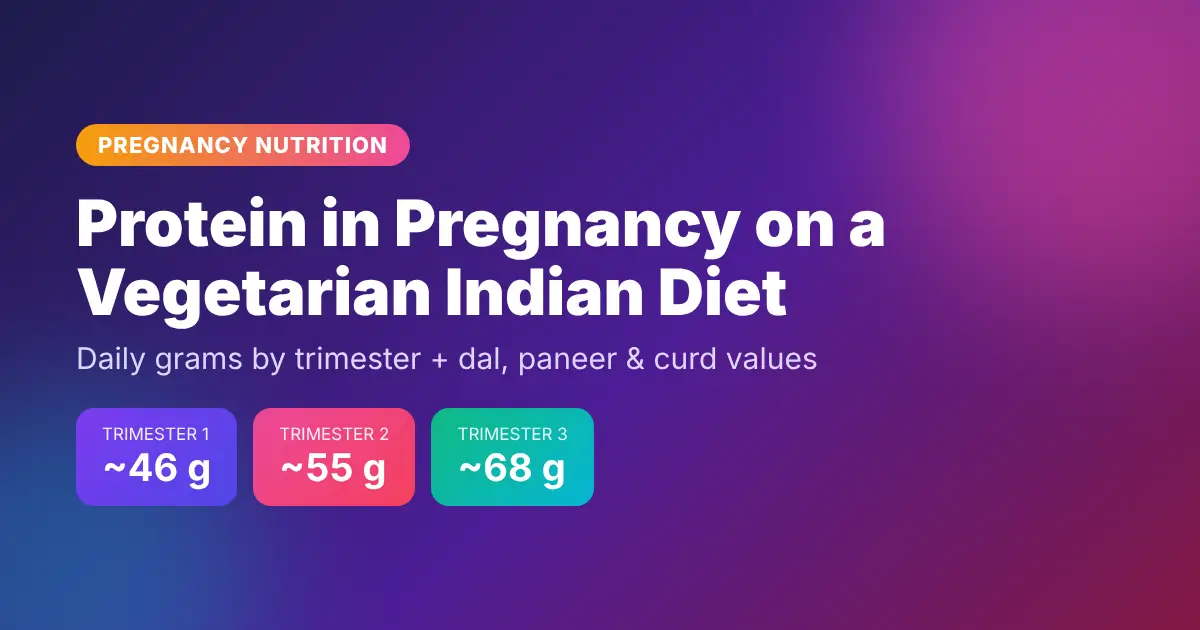
How much protein do you need in pregnancy on a vegetarian Indian diet? According to ICMR-NIN 2020, a pregnant woman needs about 46–47 g of protein per day in the first trimester, about 55–56 g in the second trimester, and about 68 g in the third trimester. You can meet this on a vegetarian diet by eating dal, paneer, curd, milk, soya chunks and roasted chana at every meal, along with roti or rice. A simple rule is to include a protein food in each of your three main meals and two snacks.
Please note: This article is for general information only and is not medical advice. Your protein needs depend on your weight, health and pregnancy. Always follow your doctor’s or dietitian’s advice.
How Much Protein Should a Pregnant Woman Eat in Each Trimester?
ICMR-NIN 2020 sets the protein requirement for a non-pregnant Indian woman (reference weight 55 kg) at about 46 g per day. Pregnancy adds a small amount early and much more later:
| Trimester | Extra protein | Total per day (approx.) |
|---|---|---|
| First (weeks 1–13) | +0.5 g | about 46–47 g |
| Second (weeks 14–27) | +9.5 g | about 55–56 g |
| Third (weeks 28–40) | +22 g | about 68 g |
Other NIN material quotes slightly lower extras (about +8 g and +18 g), and US guidelines suggest about 71 g per day for pregnancy, so published figures differ a little. ICMR-NIN also notes that people who eat mostly cereals with lower-quality protein may need closer to 1 g per kg of body weight. Your doctor will decide what is right for you.
How to Work Out Your Own Protein Target
ICMR-NIN’s basic requirement is 0.83 g of protein per kg of body weight per day. For pregnancy, add the extra grams for your trimester.
Example: a woman who weighs 60 kg needs about 0.83 × 60 = 50 g per day when not pregnant. In the third trimester, adding 22 g gives about 72 g per day.
Can a Vegetarian Diet Give Enough Protein During Pregnancy?
Yes. Well-planned vegetarian diets can meet protein needs in pregnancy. The key is to include protein at every meal rather than only roti, rice and sabzi. Indian vegetarian diets have strong protein sources: dal, rajma, chana, paneer, curd, milk, soya chunks, peanuts and sattu. If you also eat eggs, they help, but they are not needed.
The challenge is quantity and consistency. Many Indian diets give only 40–55 g per day, because meals are heavy on cereals and light on dal and dairy. In the third trimester, reaching about 68 g needs planning.
How Much Protein Is in One Katori of Dal and 100 g of Paneer?
- One katori of cooked dal (about 150 g): roughly 7–9 g of protein for thin dal such as moong, masoor or toor. Thicker dal, chana or rajma can give 10–14 g, because there is more legume and less water.
- 100 g of paneer: roughly 14–18 g of protein. Values vary with the brand and fat content.
Raw dal has about 22–24 g of protein per 100 g, but when cooked it absorbs water, so a katori of cooked dal gives much less.
Protein in Dal, Paneer, Curd and Other Vegetarian Foods
| Food | Serving | Protein (approx.) |
|---|---|---|
| Cooked dal (toor, moong, masoor) | 1 katori (150 g) | 7–9 g |
| Chana, rajma (cooked) | 1 katori (150 g) | 10–14 g |
| Paneer | 100 g | 14–18 g |
| Curd (dahi) | 1 katori (150 g) | 5–6 g |
| Milk | 1 glass (250 ml) | about 8 g |
| Soya chunks (dry) | 30 g | about 15 g |
| Roasted chana | 30 g | about 6 g |
| Roti | 1 piece | about 3 g |
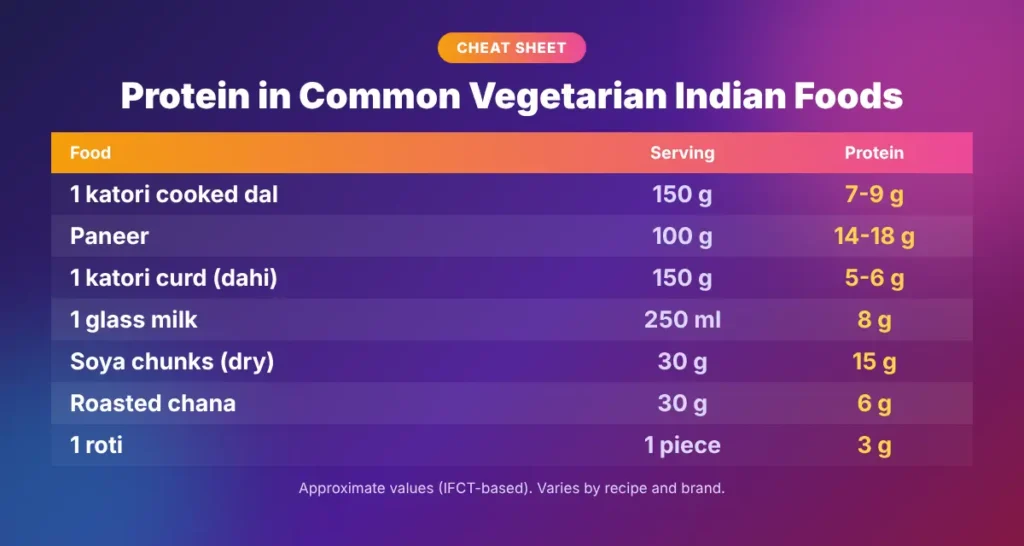
Values are approximate and based on Indian Food Composition Tables (IFCT 2017) and common serving sizes. Recipes and brands vary.
Which Vegetarian Indian Foods Are Highest in Protein for Pregnancy?
- Soya chunks: about 52 g per 100 g dry, the most protein-dense food in a normal kitchen.
- Sattu and roasted chana: about 18–25 g per 100 g, cheap and easy snacks.
- Paneer: about 14–18 g per 100 g.
- Dals and legumes (chana, rajma, moong, masoor, urad): about 7–9 g per 100 g cooked.
- Milk and curd: about 3–4 g per 100 g, easy to add to every day.
- Peanuts and nuts: protein plus healthy fats, in small portions.
Sample Day: About 65 g of Vegetarian Protein
| Meal | What to eat | Protein (approx.) |
|---|---|---|
| Breakfast | 2 moong dal chillas + 1 glass milk | 17 g |
| Mid-morning | 30 g roasted chana | 6 g |
| Lunch | 2 rotis + 1 katori dal + 1 katori curd + sabzi | 19 g |
| Dinner | 100 g paneer bhurji + 2 rotis + sabzi | 22 g |
| Total | about 64 g |
To reach 68 g or more in the third trimester, add a glass of milk, a small bowl of cooked soya chunks, or a handful of peanuts.
How Can I Add More Protein to My Pregnancy Diet Without Eating Meat?
- Make dal thicker and have a second katori at lunch or dinner
- Add paneer, soya chunks or sprouts to sabzi, pulao and parathas
- Use besan or moong dal chillas instead of plain bread
- Have curd, lassi or chaas with meals
- Snack on roasted chana, sattu drink, peanuts or makhana instead of biscuits
- Add milk once or twice a day
- Mix soya flour or besan into roti dough
Combine Foods for Better Protein Quality
Plant proteins are lower in some essential amino acids. Cereals are low in lysine, while dal is rich in it. Eating dal with roti or rice gives a better amino acid balance, which is why dal-chawal and dal-roti are such good combinations. You do not need to combine them in the same meal, as long as you eat a variety through the day.
Other Nutrients to Watch on a Vegetarian Pregnancy Diet
Protein is not the only nutrient that needs attention. Vegetarian pregnant women should also talk to their doctor about vitamin B12, iron, calcium, vitamin D, iodine and omega-3 (DHA). Vitamin B12 is mainly found in animal foods and dairy, so supplements are often advised. Take the iron, folic acid and calcium supplements your doctor prescribes.
Should I Take Protein Powder During Pregnancy?
Food should come first. Protein powders can contain added sugar, herbs or ingredients that are not tested for pregnancy. If you are not able to meet your needs from food, ask your doctor or dietitian before using any supplement.
When to Talk to Your Doctor
Speak to your doctor or dietitian if you have nausea and cannot eat enough, are underweight or gaining weight slowly, have diabetes, kidney disease or high blood pressure, or are expecting twins. Your protein needs may be different.
Related tools
Frequently Asked Questions
How much protein do I need in pregnancy on a vegetarian Indian diet (dal, paneer, curd)?
About 46–47 g per day in the first trimester, 55–56 g in the second and 68 g in the third (ICMR-NIN 2020). A mix of dal, paneer, curd, milk, soya and chana through the day can meet this.
Can a vegetarian diet give enough protein during pregnancy?
Yes, with planning. Include a protein food at each meal and snack, and use a variety of dals, dairy, soya and legumes.
How much protein should a pregnant woman eat in each trimester?
About 46–47 g in the first trimester, 55–56 g in the second and 68 g in the third, for a reference woman. Your doctor may advise a different amount.
Which vegetarian Indian foods are highest in protein for pregnancy?
Soya chunks (about 52 g per 100 g dry), sattu and roasted chana (about 18–25 g), paneer (about 14–18 g), and dals and legumes (about 7–9 g per 100 g cooked).
How much protein is in one katori of dal and in 100 g of paneer?
One katori of cooked thin dal has about 7–9 g, and thicker dal, chana or rajma about 10–14 g. 100 g of paneer has about 14–18 g.
How can I add more protein to my pregnancy diet without eating meat?
Make dal thicker, add paneer or soya to sabzi, eat curd and milk daily, snack on roasted chana or sattu, and use besan or moong chillas for breakfast.
Is soya safe during pregnancy?
Soya foods in normal food amounts are generally considered fine, but ask your doctor if you have thyroid problems or allergies.
Is paneer good for pregnancy?
Yes. Paneer is a good source of protein and calcium. Choose pasteurised paneer from a trusted source.
How much protein is in one egg for vegetarians who eat eggs?
One egg has about 6 g of protein. Eggs are optional, and only for those who eat them.
What happens if I don’t get enough protein in pregnancy?
Low protein for a long time can affect your baby’s growth and your own health. If you are worried about your diet, speak to your doctor or dietitian.
Bottom Line
On a vegetarian Indian diet, you need about 46–47 g of protein in the first trimester, 55–56 g in the second and 68 g in the third. Dal, paneer, curd, milk, soya chunks and roasted chana can easily meet these needs if you include them at every meal. Plan your day, watch for B12 and iron, and talk to your doctor about your own needs.
References
- ICMR-NIN (2020). Nutrient Requirements for Indians: Recommended Dietary Allowances and Estimated Average Requirements. Hyderabad: National Institute of Nutrition.
- ICMR-NIN (2024). Dietary Guidelines for Indians. nin.res.in
- ICMR-NIN. Indian Food Composition Tables (IFCT 2017). Hyderabad: National Institute of Nutrition.
Disclaimer
This article is for educational purposes only and is not medical advice. Always consult your doctor or a registered dietitian.