

For delivery in Pakistan, pack your CNIC and your husband’s CNIC, all antenatal reports and ultrasound scans, comfortable front-opening clothes, maternity pads, toiletries, a phone charger, some cash, and a separate set of newborn clothes, diapers and blankets for your baby. Hospitals in Pakistan vary a lot, from big private hospitals that supply many basics to government hospitals where families bring almost everything, so this guide covers everything a first-time or second-time mother is likely to need, plus extras for a C-section.
When Should I Pack My Hospital Bag During Pregnancy?
The best time to pack your hospital bag is between 32 and 36 weeks of pregnancy, so it is ready well before your due date. Babies often arrive a little early, and in the last weeks you will be tired and heavy, so finishing the bag early removes one big worry. Keep the bag near the front door, tell your husband or a family member where it is, and keep your documents in a separate folder on top so they can be grabbed quickly.
If you are expecting twins, have a high-risk pregnancy, or your doctor has warned about early delivery, pack by 28 to 30 weeks instead. A good habit is to pack in three parts: one bag for you, one for the baby, and one small folder for documents and money. A week before the due date, do a final check and replace anything you have been using, like your phone charger.
What Documents Do I Need to Take to the Hospital for Delivery in Pakistan?
For delivery in Pakistan, take your original CNIC, your husband’s CNIC, your complete antenatal file (doctor’s notes, blood reports, ultrasound scans and your blood group), and your hospital booking or registration slip. These are the papers most hospitals ask for at admission. Also bring photocopies of both CNICs, because you may be asked to leave copies at the admission desk.
A few more papers are worth keeping in the folder:
- Your marriage certificate (nikah nama) copy, as some hospitals may ask for it
- Previous delivery or C-section records, if you have had children before
- Medical insurance or health card details, if you have cover
- Your doctor’s phone number and the hospital’s contact number
- Details of any allergies or medicines you take
After the birth, the hospital usually issues a birth slip or certificate, which you will need later to register your baby with NADRA and get the child registration certificate. Requirements can differ by hospital, so it is wise to call the hospital a few weeks before your due date and ask exactly what they need.
What Should I Pack in My Hospital Bag for Myself?
For yourself, pack two or three loose, comfortable outfits (preferably front-opening for breastfeeding), a large dupatta or shawl, nursing bras, maternity pads, disposable underwear, slippers, toiletries, and a going-home outfit. You will bleed for several weeks after birth, so heavier pads are important, and you will be breastfeeding often, so clothes that open easily will make life simpler.
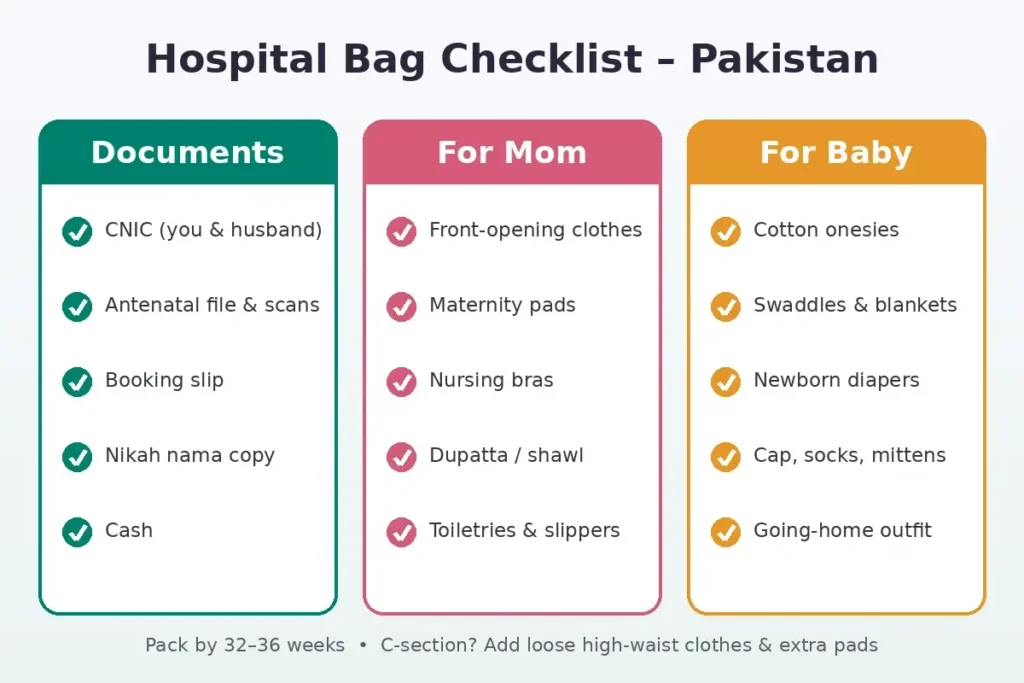
Here is a practical checklist:
- Clothes: 2 to 3 loose shalwar kameez or nightgowns, a cotton gown for labour, warm socks, and a comfortable going-home outfit
- Modesty items: a big dupatta, shawl or abaya, and a nursing cover if you prefer privacy
- Hygiene: heavy-flow maternity pads, disposable or old cotton underwear, toothbrush, toothpaste, soap, shampoo, lip balm, and hair ties
- Breastfeeding: two or three nursing bras, nursing pads, and nipple cream
- Comfort: a pillow from home, slip-on slippers, a small towel, and a water bottle
- Small extras: a prayer mat and hijab or scarf, a phone and charger, a power bank, and a notebook for your questions to the doctor
- Snacks: dates, biscuits, and dry fruit for energy after labour, if your doctor allows eating
Leave jewellery and valuables at home. Ask your hospital in advance whether they provide gowns, bed sheets and towels, since many private hospitals do while others expect you to bring your own.
What Should I Pack in the Hospital Bag for My Baby?
For your baby, pack three to five newborn outfits, soft cotton blankets or swaddles, newborn diapers, wipes, caps, socks, mittens, and one warm going-home outfit. Newborns lose heat quickly, so layers matter, especially in winter, while soft breathable cotton is best in the Pakistani summer heat.
Here is what to include:
- 3 to 5 cotton onesies or baby suits in newborn size, plus a few in the next size up in case your baby is bigger than expected
- 2 to 3 soft blankets or swaddling cloths, and one thicker blanket or shawl in winter
- Newborn diapers (one small pack) and baby wipes
- 2 to 3 caps, socks and scratch mittens
- Muslin or cotton cloths for wiping and burping
- Gentle baby soap or wash, mild baby lotion, and cotton wool for the first days
- A clean going-home outfit and a hooded blanket
- A rear-facing infant car seat if you own a car, which is the safest way for a newborn to travel
Wash all baby clothes in a mild detergent and dry them in the sun before packing. Skip heavy perfumes, powders and anything with small buttons or loose decorations. Your hospital or paediatrician will advise on baby care and feeding, so follow their guidance over general advice from relatives.
What Should My Birth Partner Pack for the Hospital?
Your birth partner should pack their own CNIC, some extra cash, a phone and charger, a change of clothes, toiletries, a water bottle and snacks, and a prayer mat. They may be at the hospital for many hours or even several days, and hospital cafeterias and shops are not always open or nearby, so being prepared helps them support you properly.
Useful extras for your husband, mother, sister or whoever is with you:
- Cash in small notes for pharmacy items, tests, parking and canteen food, since some hospitals ask for deposits or payments before and after delivery
- A list of important phone numbers, including your doctor and close family
- A light blanket or shawl and a pillow, as waiting areas can get cold at night
- A small bag for your belongings and the baby’s used clothes
- A camera or phone with enough storage for first photos, where the hospital permits it
- A copy of the hospital’s visiting rules, as many hospitals limit the number of visitors
It also helps to decide beforehand who will handle paperwork, who will update the family, and who will bring meals, so you can rest.
What Extra Items Do I Need in My Hospital Bag for a C-Section?
For a C-section, add loose high-waisted clothes or front-opening nightgowns, extra-large maternity pads, an abdominal binder if your doctor approves, slip-on slippers, a small pillow for holding against your stitches, and enough clothes for a stay of three to four days. After surgery your stomach will be sore, so tight waistbands and anything that rubs the wound should be avoided.
Pack these in addition to your normal bag:
- Clothing: loose, soft, high-waisted underwear or clothes that sit above the stitches, and button-front gowns
- Support: a small pillow or folded towel to hold against your tummy when you cough, laugh or feed the baby
- Footwear: slip-on shoes, since bending is difficult after surgery
- Extra supplies: more maternity pads, as well as a longer stay means more changes
- Comfort: lip balm, a hand towel, and a long phone charger cable so you can reach it from bed
- Medication notes: a list of any regular medicines, and ask your doctor about stool softeners and painkillers that are safe while breastfeeding
Because recovery takes longer, ask a family member to stay with you and help with the baby in the first days. Always follow your surgeon’s instructions on movement, wound care and when to return for a check-up.
Final Tips for Packing Your Hospital Bag in Pakistan
Call your hospital before your due date to ask what they provide and what you need to bring, keep your documents together in one folder, and pack lightly, because hospital rooms are small. If you are travelling from another city or village for delivery, pack a little extra for the baby and keep your doctor’s contact details with you. Seasonal changes also matter: pack warmer layers in winter and lighter cotton in summer.
Every pregnancy and every hospital is different, so use this checklist as a guide and adjust it with advice from your gynaecologist. With a well-packed bag, you can focus on what matters most: welcoming your baby.