

Two questions come up in almost every pregnancy conversation in Pakistan. How much should I eat now? And am I getting enough protein for my baby?
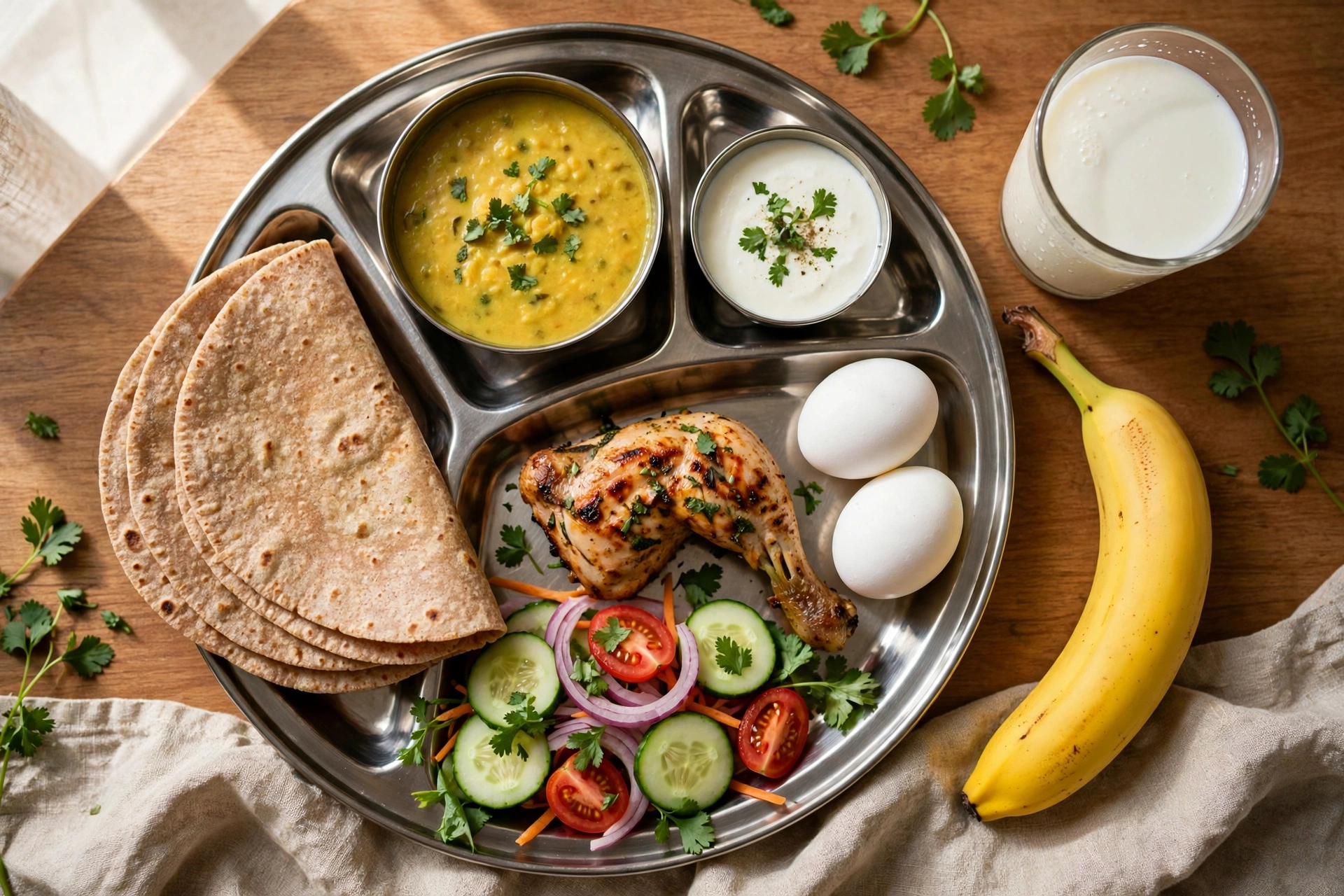
The honest answer is calmer than most people expect. You do not need to double your food. You need a small, planned increase in calories, and a steady amount of protein from the foods already in your kitchen: roti, dal, eggs, milk and yoghurt.
How many calories do you need in each trimester?
Your base need stays close to your normal need in the first trimester. The standard guide used by doctors, from the Institute of Medicine, adds nothing extra in the first trimester, about 340 extra calories a day in the second trimester, and about 452 extra calories a day in the third trimester.
- First trimester: no extra calories
- Second trimester: about 340 extra kcal a day
- Third trimester: about 452 extra kcal a day
So a woman who needed about 1,900 kcal a day before pregnancy needs roughly 2,240 kcal in the second trimester and about 2,350 kcal in the third. Your own base depends on your weight, height and daily activity, which is why a personal estimate beats a guess. Our Pregnancy Calorie and Protein Calculator works it out from your own numbers.
How much protein do you need each day?
In pregnancy the guide is about 1.1 grams of protein per kilogram of your body weight each day. A woman who weighs 60 kg needs about 66 grams a day. A woman who weighs 70 kg needs about 77 grams a day.
Protein builds your baby’s body, the placenta and your own extra blood supply. Most women in Pakistan get close to this from normal meals, as long as dal, dairy or eggs appear two or three times a day.
The best Pakistani protein foods, with grams
- 1 boiled egg: about 6 g protein
- 1 glass of milk (250 ml): about 8 g protein
- Dahi or yoghurt (100 g): about 4 g protein
- 1 katori cooked dal: about 12 g protein
- 1 katori cooked chana: about 11 g protein
- Chicken, cooked (100 g): about 27 g protein
- Paneer (100 g): about 18 g protein
- 1 roti (about 30 g): about 3 g protein
None of these is expensive or special. The protein is already in a normal desi kitchen. What matters is spreading it across the day instead of eating it all at dinner.
One balanced day with roti and dal
- Breakfast: 2 boiled eggs and 1 glass of milk, about 20 g protein
- Lunch: 1 katori dal, 2 rotis and salad, about 18 g protein
- Evening snack: a small bowl of dahi with a banana, about 4 g protein plus energy
- Dinner: chicken curry with about 100 g chicken and 1 roti, about 30 g protein
That day reaches about 72 grams of protein, above the 66 gram target for a 60 kg woman, with ordinary food and no protein powder or supplements.
Do you need to eat for two?
No. Your baby is small, and the extra need is a few hundred calories, not a second full plate. Eating for two in the literal sense mostly adds extra weight for the mother, which raises the risk of gestational diabetes and a difficult delivery. Eat for one, and add the planned extra on top. A glass of milk and a piece of fruit in the second trimester covers most of it.
Frequently asked questions
Can a vegetarian diet give enough protein in pregnancy?
Yes, if dal, chana, dahi, milk and paneer appear daily. Plant proteins pair well across the day, so dal at lunch and milk at night cover each other. Our Protein Intake Calculator shows your personal gram target.
How much weight should I gain while eating this way?
That depends on your BMI before pregnancy. The healthy total gain for a normal BMI is about 11.5 to 16 kg. You can check your own range with our Pregnancy Weight Gain Calculator.
Is milk alone enough for protein?
No. A glass gives about 8 grams, which is a good start, but you still need dal, eggs or other protein foods across the day to reach 60 to 80 grams.
Related Tools
- Pregnancy Calorie and Protein Calculator: works out your daily calories and protein from your weight and trimester
- Protein Intake Calculator: your daily protein target in grams
- Pregnancy Weight Gain Calculator: the healthy gain range for your BMI
Sources
- Institute of Medicine, nutrition and weight gain guidance for pregnancy
- ACOG, Nutrition During Pregnancy
This article is general information, not medical advice. If you have diabetes, thyroid trouble or a high risk pregnancy, follow your own doctor’s diet plan.